
Which rubber material of O-rings could resist low temperature
Low temperature rubber materials
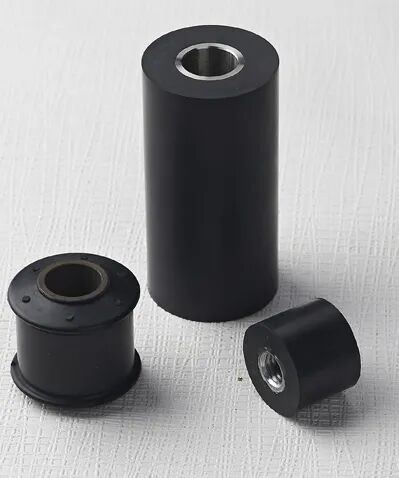
It is a misconception that all rubber possesses cold resistance and can be used interchangeably, provided the material quality is good. In reality, the low-temperature tolerance varies drastically between different types of rubber. Some begin to stiffen and lose their elasticity at around 0°C, while others can remain elastic even at extreme temperatures as low as -60°C or even -100°C. Standard rubber—designed for ambient temperatures—will rapidly undergo a glass transition, becoming brittle and rigid in cold environments, thereby completely losing its ability to provide a reliable seal.
Why is rubber sensitive to low temperatures
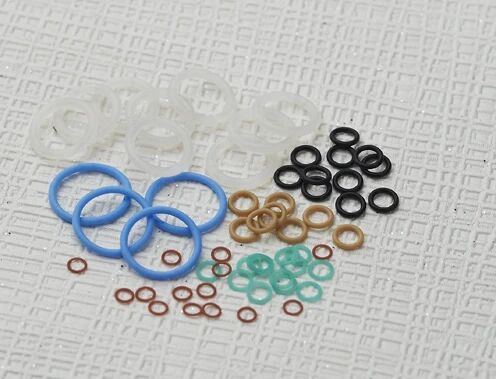
Rubber is a highly elastic polymer. At room temperature, its molecular chains can freely coil, stretch, and rebound, providing sealing characteristics such as flexibility, toughness, deformability, and the ability to compensate for gaps. As the ambient temperature drops, the kinetic energy of the molecular chains decreases significantly; the chains gradually freeze and stiffen, losing their capacity for free deformation.
When the temperature falls below the material's glass transition temperature (Tg):
1. The rubber molecular chains become completely frozen, rendering them unable to rebound, stretch, or deform;
2. The material transitions from a highly elastic rubbery state to a hard, brittle glassy state;
3. Its elastic compensation capability is entirely lost, making the material prone to cracking or shattering under even slight pressure, vibration, or deformation;
4. The seal can no longer conform to the mating surface, resulting in permanent gaps that leads to pressure loss, seepage, or the leakage of gases or liquids.
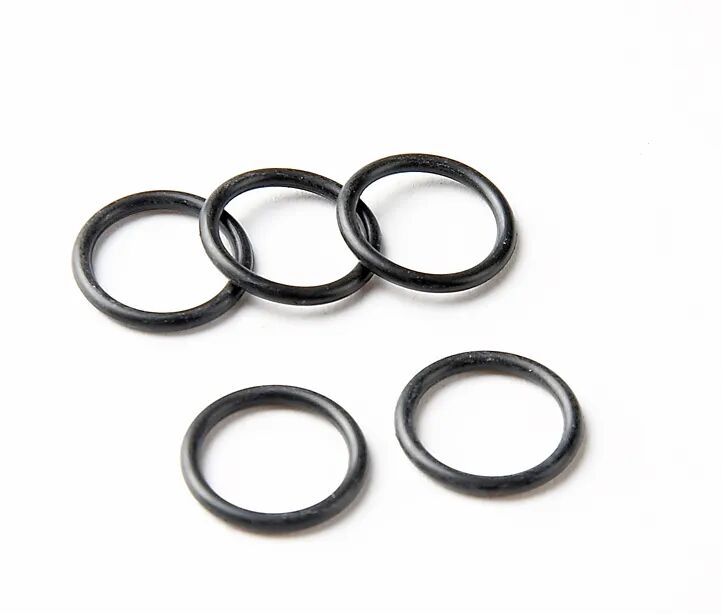
Low temperature resistant rubber materials
1. Specialized Cold-Resistant Silicone: While standard silicone already possesses excellent low-temperature properties, this specialized, cold-resistant formulated version achieves a glass transition temperature as low as -70°C to -80°C. It retains exceptional elasticity even in ultra-low-temperature environments of -60°C, showing no signs of cold-induced brittleness. It offers superior resistance to deformation at low temperatures and outstanding weather resistance, remaining unaffected by diurnal temperature fluctuations or freeze-thaw cycles. Suitable applications include: waterproof sealing for outdoor use in extreme cold, cold-chain equipment, cryogenic instruments, medical cryogenic devices, outdoor home appliances in northern regions, and static sealing for vacuum-based cryogenic equipment.
2. Fluororubber (FKM): Standard fluororubber offers good high-temperature resistance but only moderate low-temperature performance. However, specially modified low-temperature variants can overcome these cold-resistance limitations, remaining functional at temperatures as low as -40°C to -60°C. These variants retain the core advantages of standard fluororubber—such as excellent resistance to oils, corrosion, high temperatures, and various chemical media—thereby solving sealing challenges in extreme-cold chemical processing and low-temperature fuel systems. Typical applications include low-temperature oil and gas equipment, handling of chemical fluids in extreme-cold environments, low-temperature fuel pipelines, and equipment subject to fluctuating high and low-temperature conditions.
EPDM (Ethylene Propylene Diene Monomer): EPDM is one of the most widely used cold-resistant rubbers in industry. Standard formulations can stably withstand low temperatures ranging from -40°C to -50°C; the material resists hardening and brittle fracture at low temperatures while maintaining high elasticity. It also offers excellent resistance to ozone, aging, water vapor, and freeze-thaw cycles, making it the preferred material for outdoor low-temperature equipment. Typical applications include outdoor power distribution cabinets in northern regions, plumbing valves, antifreeze-handling equipment, cold-air seals, and outdoor pneumatic components.
Prev : none
Next : none

Phone: +86 15168112857
Address: Industry zone of changhe town, Ningbo city, Zhejiang province, China





 English
 Russian
 French
 Spanish
 German
 Japanese
 +86 15168112857